CIMA-Qualified Accountant for Self Assessment: What It Means and Why It Matters
Anyone can call themselves an accountant in the UK. A professional qualification like CIMA is what actually tells you something.
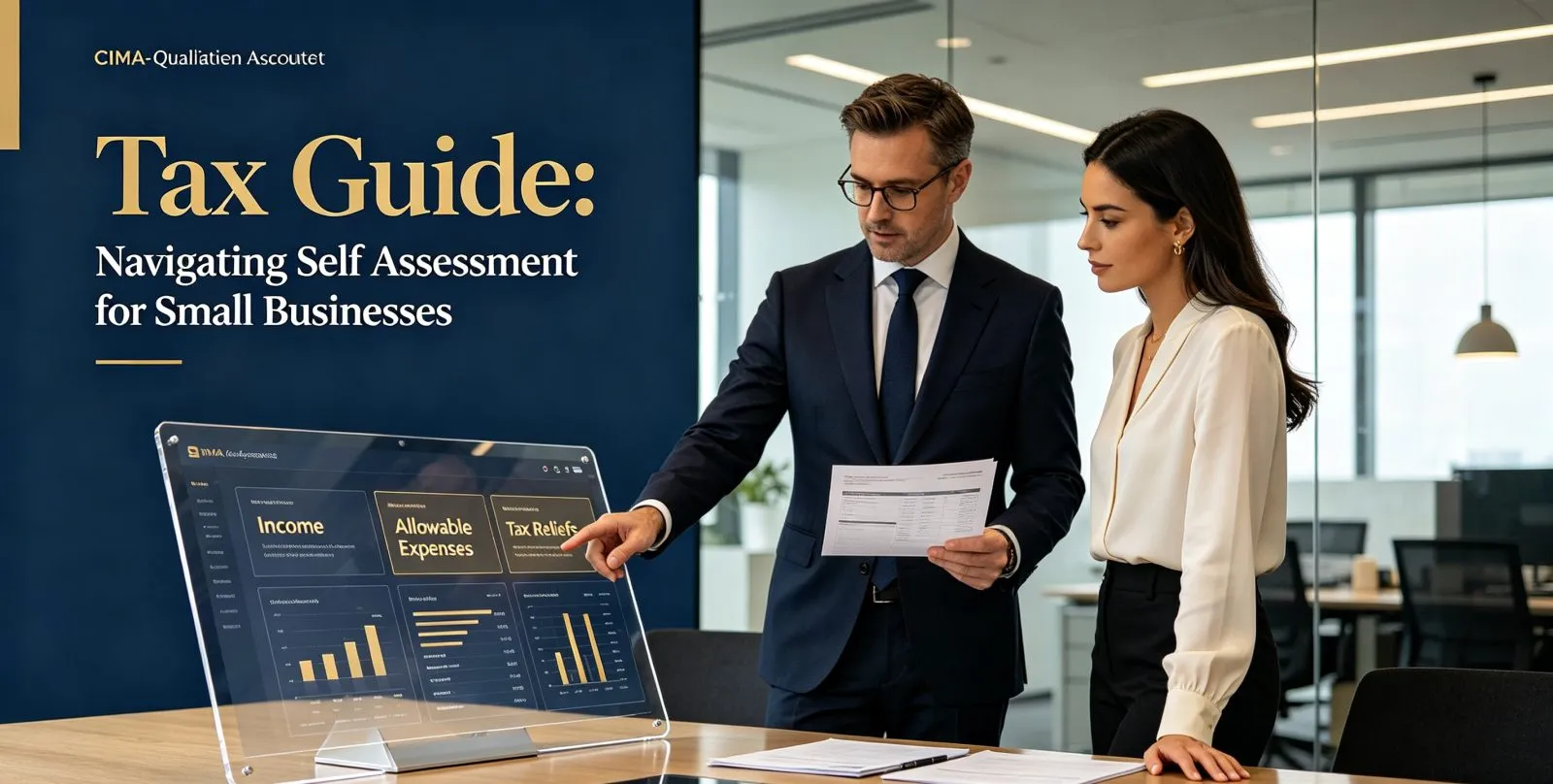
Here's something that surprises a lot of people: in the UK, the word "accountant" isn't a protected title. Unlike "solicitor" or "doctor," there's no legal requirement to hold any qualification at all before calling yourself an accountant and taking on paying clients. Anyone can put "accountant" on a business card. That's exactly why the specific letters after someone's name matter so much when you're choosing who handles your tax affairs.
This guide explains what CIMA-qualified actually means, how it compares to other UK accounting qualifications, and what it means in practice for something like Self Assessment.
What does CIMA stand for?
CIMA is the Chartered Institute of Management Accountants. It's one of the major professional accounting bodies in the UK, alongside ACCA (Association of Chartered Certified Accountants) and ICAEW (Institute of Chartered Accountants in England and Wales). Becoming CIMA-qualified involves passing a structured series of professional exams covering financial accounting, management accounting, tax, audit, and business strategy, plus a minimum period of supervised practical experience before the qualification is awarded.
Crucially, CIMA is a chartered body. That means members are bound by a professional code of ethics, are required to complete ongoing continuing professional development (CPD) every year to keep their knowledge current, and can face formal disciplinary action — including being struck off — if they act unprofessionally or negligently. None of that oversight exists for someone who simply decides to call themselves an accountant with no qualification behind it.
CIMA vs ACCA vs ICAEW — what's the actual difference?
All three are legitimate, respected chartered qualifications, and in practice their standards overlap considerably. The main historical distinction is one of specialism:
For day-to-day tax work like Self Assessment, sole trader accounts, and small business bookkeeping, all three qualifications indicate a properly trained, regulated professional. What actually matters for you as a client isn't which of the three letters someone holds — it's that they hold one of them at all, rather than none.
Why this matters more than people realise
Self Assessment might feel like a fairly mechanical process — plug numbers into a form, submit it, done. In reality, there's a lot of judgement involved: what counts as an allowable expense, how to correctly treat capital purchases, whether you should be using the trading allowance instead of itemising expenses, how to handle multiple income sources, and how changes in your circumstances during the year affect your tax position. Getting these judgement calls wrong doesn't just cost you money in an inflated tax bill — it can also trigger HMRC enquiries if things look inconsistent or aggressive.
A chartered accountant's training specifically covers this kind of judgement, backed by an ethical framework that prioritises accuracy and compliance over simply telling you what you want to hear. An unqualified "accountant" — and there are many operating perfectly legally in the UK — may be competent, or may not be. There's no exam, no ongoing CPD requirement, and no professional body to complain to if something goes wrong.
Questions worth asking before you hire an accountant
If you're evaluating who to trust with your Self Assessment, these are reasonable, direct questions to ask upfront:
A genuinely qualified accountant will answer these without hesitation — most are happy to have their credentials checked, since it's one of the things that separates them from unregulated competitors.
How to verify a qualification yourself
You don't have to take anyone's word for it. Each professional body maintains a public register:
It takes about thirty seconds and removes any doubt.
Does a qualified accountant cost more?
Sometimes, though not always by as much as people assume — and it's worth weighing against what an unqualified preparer might miss or get wrong, which can cost far more in the long run through overpaid tax, missed allowances, or HMRC penalties for an incorrectly filed return. Many qualified accountants now also offer fixed, transparent pricing rather than the old model of unpredictable hourly billing, which narrows the value gap further.
The bottom line
You're not legally required to use a qualified accountant for Self Assessment — plenty of people file it themselves, and plenty use unregulated preparers. But if you're paying someone else to take on that responsibility, it's reasonable to expect them to be properly trained, regulated, and accountable if something goes wrong. A chartered qualification like CIMA, ACCA, or ICAEW is the clearest signal of that.
Frequently asked questions
No. Unlike solicitor or doctor, anyone can legally call themselves an accountant in the UK regardless of qualifications. This is exactly why checking for a recognised professional qualification like CIMA, ACCA, or ICAEW matters.
Both are chartered UK accounting qualifications with overlapping standards. CIMA has traditionally focused on management accounting and business strategy, while ACCA has a broader focus spanning audit, tax, and financial management. For most Self Assessment and small business work, both indicate a properly trained, regulated professional.
CIMA maintains a public member directory (via the CIMA/CGMA website) where you can verify a membership number. Most legitimate accountants are happy to provide this on request.
No, it is not a legal requirement. You can file it yourself or use an unregulated preparer. Using a chartered accountant simply adds a layer of trained judgement, ethical accountability, and professional indemnity cover that unregulated preparers do not carry.
CIMA training includes taxation as part of its syllabus, alongside financial accounting, management accounting, and business strategy, and members are required to complete ongoing CPD to keep their knowledge current.